


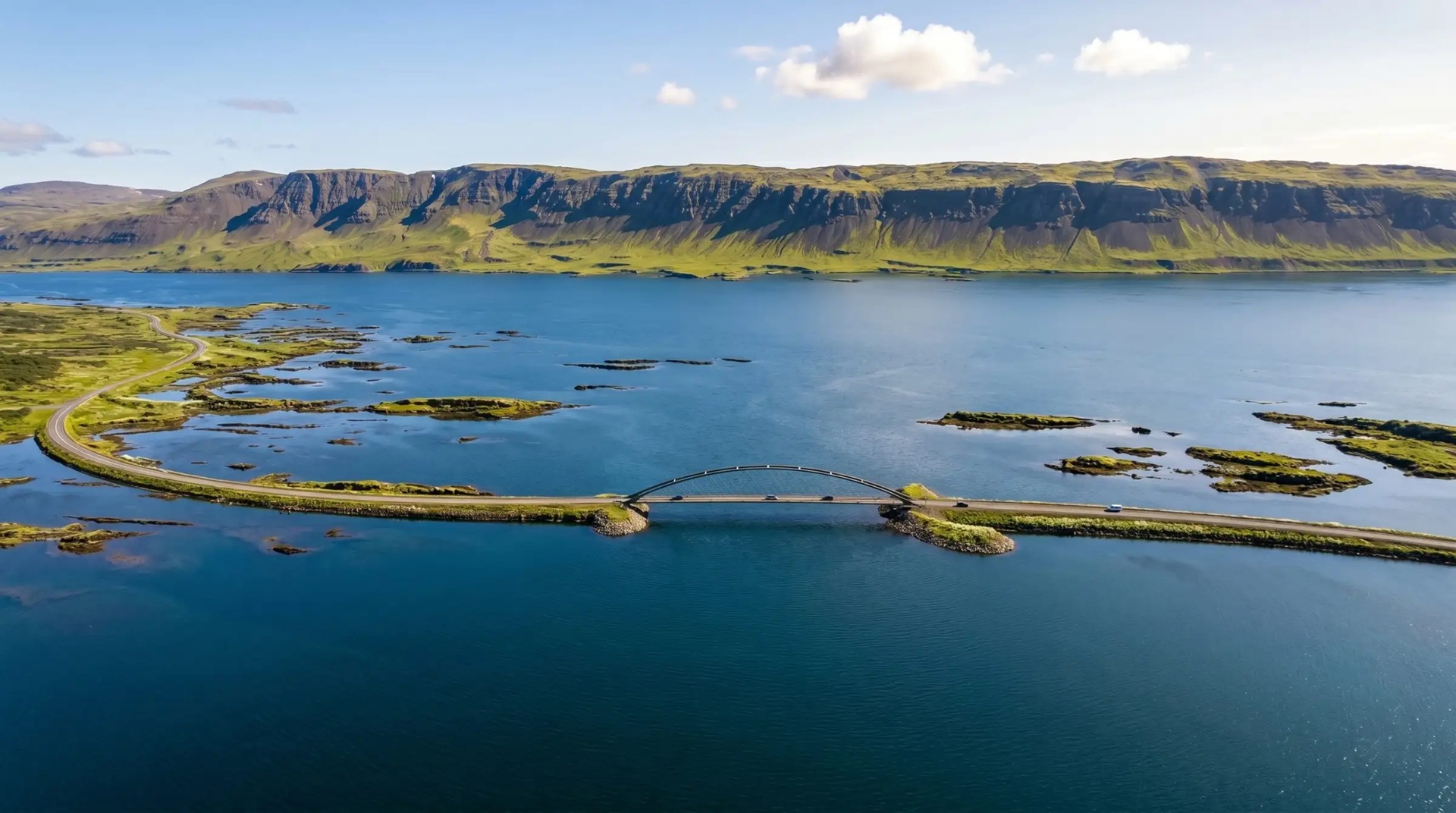
The deadline for submitting bids for the construction of the Djúpafjörður Bridge has been extended for a second time and is now set for 8 September 2026. The Icelandic Road and Coastal Administration (Vegagerðin) says the extension was granted after several prospective contractors requested additional time to prepare their bids. The project is scheduled for completion no later than 1 October 2028.
According to G. Pétur Matthíasson, Communications Director at Vegagerðin, the extension reflects strong interest from the construction industry.
“We are pleased with this. It simply demonstrates the high level of interest in the tender,” Matthíasson said.
No bids have yet been submitted.
A Major Bridge for the Westfjords
The new Djúpafjörður Bridge will be similar in design to the bridges spanning Mjóifjörður in Ísafjarðardjúp and Eldvatn in Skaftártunga. However, it will be both longer and higher than either of those structures.
The bridge will measure 210 metres in length, stand 25 metres high, and feature a reinforced concrete deck. It will provide approximately 8 metres of clearance above sea level, allowing vessels to pass beneath it.

A Project Decades in the Making
Planning for the Djúpafjörður Bridge has been underway for nearly 30 years. Once completed, it will shorten the driving distance between Reykjavík and Ísafjörður by more than 50 kilometres.
The bridge represents the final phase of the Vestfjarðavegur (Route 60) project through Gufudalssveit, completing one of Iceland’s most significant transport infrastructure projects in the Westfjords.
Delays and Revised Schedule
The project has experienced several delays since construction preparations began in 2020. Completion was initially expected in 2024, later revised to 2026, and earlier this year postponed again to 2028.
The tender process was originally expected to begin in May 2026 but was delayed and officially advertised on 10 June, with an initial bid deadline of 10 July.
The submission deadline has now been extended twice—first into August and now to 8 September. Matthíasson said both extensions were made at the request of prospective bidders, noting that the European summer holiday period had delayed contractors’ ability to obtain steel pricing for the project.
Source: RÚV