


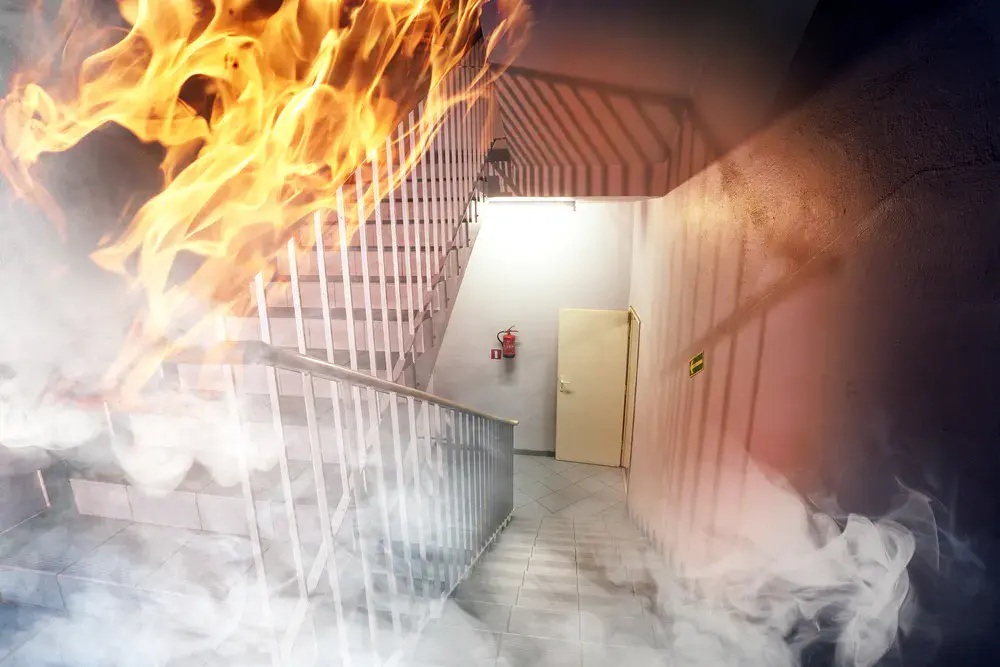
Initial findings from extensive market surveillance by Iceland’s Housing and Construction Authority (HMS) have raised serious concerns about fire-compartment interior doors, according to the authority.
For about 80% of the door types identified as being sold in Iceland, all or part of the documentation needed to demonstrate that the products meet statutory requirements and are legally marketed is missing.
HMS points out that without sufficient documentation, it is not possible to confirm that the doors meet the requirements applicable to them or provide the protection they are intended to ensure when a fire occurs.
Eight in 10 door types may be illegally marketed
An accredited inspection body has carried out the market surveillance on behalf of HMS in recent months.
According to the initial findings, manufacturers and sellers have in many cases not submitted the necessary documentation for the fire-compartment interior doors they have placed on the market.
HMS says economic operators are required to ensure that this documentation is available and accessible before a product is placed on the market. If the requested documentation is not submitted during the inspection, the products concerned may be considered illegally marketed.
In the most serious cases, HMS can take measures such as banning sales or recalling a product.
Fire-compartment doors are a key part of fire safety
Fire-compartment interior doors play an important role in the fire safety of buildings.
Unlike conventional interior doors, they are intended to limit the spread of fire and smoke between fire compartments, thereby protecting people, property and escape routes when a fire occurs.
HMS says the failure of manufacturers and sellers to submit adequate documentation is therefore a significant concern. The public must be able to trust that fire-compartment doors perform the function for which they are intended.
The doors themselves have not been confirmed to be defective
It is important to distinguish between a lack of documentation and a product that has already been found to be defective.
At this stage, HMS’s findings primarily show that necessary verification documents are missing for a large share of the door types examined. It is therefore not possible to confirm that they meet statutory requirements.
HMS has not stated in this initial finding that 80% of the doors failed testing or were found to be non-functional.
Product and operator names to be published later
HMS plans to publish the results of the market surveillance once the economic operators have been given a reasonable deadline to make improvements.
The publication will include information about products that have not been found to meet requirements and economic operators that have not complied with the authority’s instructions to make improvements.
HMS urges manufacturers, importers and sellers that have not yet submitted the necessary documentation to do so without delay.
Important for the construction industry
The findings could have considerable implications for the construction industry, as fire-compartment doors are widely used in apartment buildings, public buildings and commercial premises.
The market surveillance concerns the products themselves and the documentation intended to demonstrate that they meet the applicable requirements. HMS’s next findings will therefore be important for designers, construction managers, master tradespeople, inspectors, clients and property owners who need to be able to verify that construction products meet the requirements imposed on them.
BYGGINGAR.IS has previously reported on HMS’s proposed improvements to fire safety following the fire at Stuðlar.
Originally published in Icelandic on BYGGINGAR.IS.