


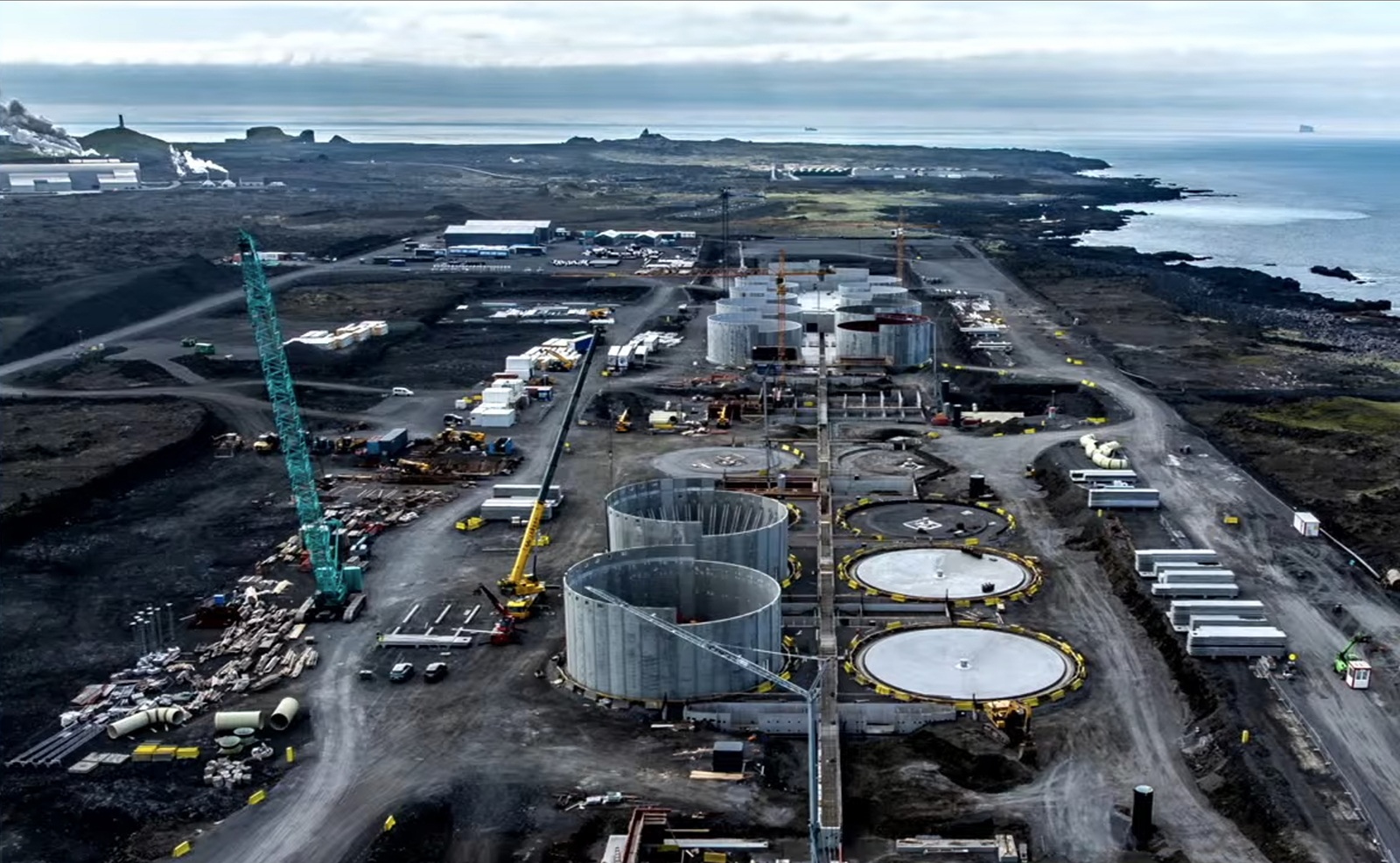
Samherja’s new land-based salmon farm in Reykjanes is expected to receive its first smolt in April. The project has been in preparation for around seven years and is one of the largest of its kind in Iceland.
Once construction is complete, the facility will have annual production capacity of 30,000 tonnes of salmon. The 66 tanks planned for the fully built facility will occupy an area comparable to 110 50-metre competition swimming pools.
Gunnar Dagur Darrason, managing director at Samherja Landeldi, presented the project at Reykjanesbær’s Business and Construction Conference. He said work on Eldisgarður, Samherja’s major land-based aquaculture project in HS Orka’s Auðlindagarður resource park on the Reykjanes peninsula, was progressing well and according to schedule.
Three construction phases and capacity equivalent to 110 competition pools
The scale of the project is considerable. Once complete, Eldisgarður will have production capacity of approximately 30,000 tonnes of salmon. That is nearly ten times the capacity of Samherja’s existing salmon farm, Silfurstjarnan.
To manage the construction, the project has been divided into three phases. Each phase will have capacity for approximately 10,000 tonnes of gutted salmon, or around 12,000 tonnes of ungutted fish.
The completed facility will contain 66 tanks, with total farming capacity of approximately 273,000 cubic metres—the equivalent volume of 110 competition swimming pools. The structures will include support buildings, three long grow-out buildings and a slaughtering facility. Each grow-out building will be approximately 500 metres long, with the fish moving through the entire process from left to right.
Gunnar Dagur Darrason, managing director at Samherja Landeldi. Photo: Vf.is
ISK 40bn phase and one concrete truck every hour
The first phase is estimated to cost ISK 40 billion and represents a major infrastructure investment in a previously undeveloped area.
That phase alone will use approximately 15,000 cubic metres of concrete and require 12 kilometres of piping. To illustrate the pace of construction, the company used 300 concrete trucks in August alone—equivalent to one truck arriving at the farm during every working hour throughout the period.
100 jobs during construction and new opportunities in the local area
The project has already had a significant economic impact in Suðurnes and is creating an average of around 100 jobs for tradespeople and engineers during construction in a growing industry.
When the facility reaches full operation, around 60 people will work directly in fish farming at the site and approximately 40 will work in product processing. Gunnar Dagur said the workplace would be highly automated, with a high level of technology and productivity needed to ensure that production is fully competitive in international markets.
The main reason for selecting the site in HS Orka’s Auðlindagarður is its proximity to warm seawater, fresh water and electricity from the nearby Reykjanes power plant. Samherja intends to use these resources while also creating new by-products and resource flows that other businesses in the surrounding area can use to generate further value in the region.
Related: Samherja’s land-based salmon farm in Reykjanes to open in two years
Originally published in Icelandic on BYGGINGAR.IS.