

The board of Náttúruhamfaratrygging Íslands (NTÍ, Icelandic Natural Catastrophe Insurance) says that if the institution is required to seek compensation from its reinsurers because of the state’s rescue operations, it could damage its credibility.
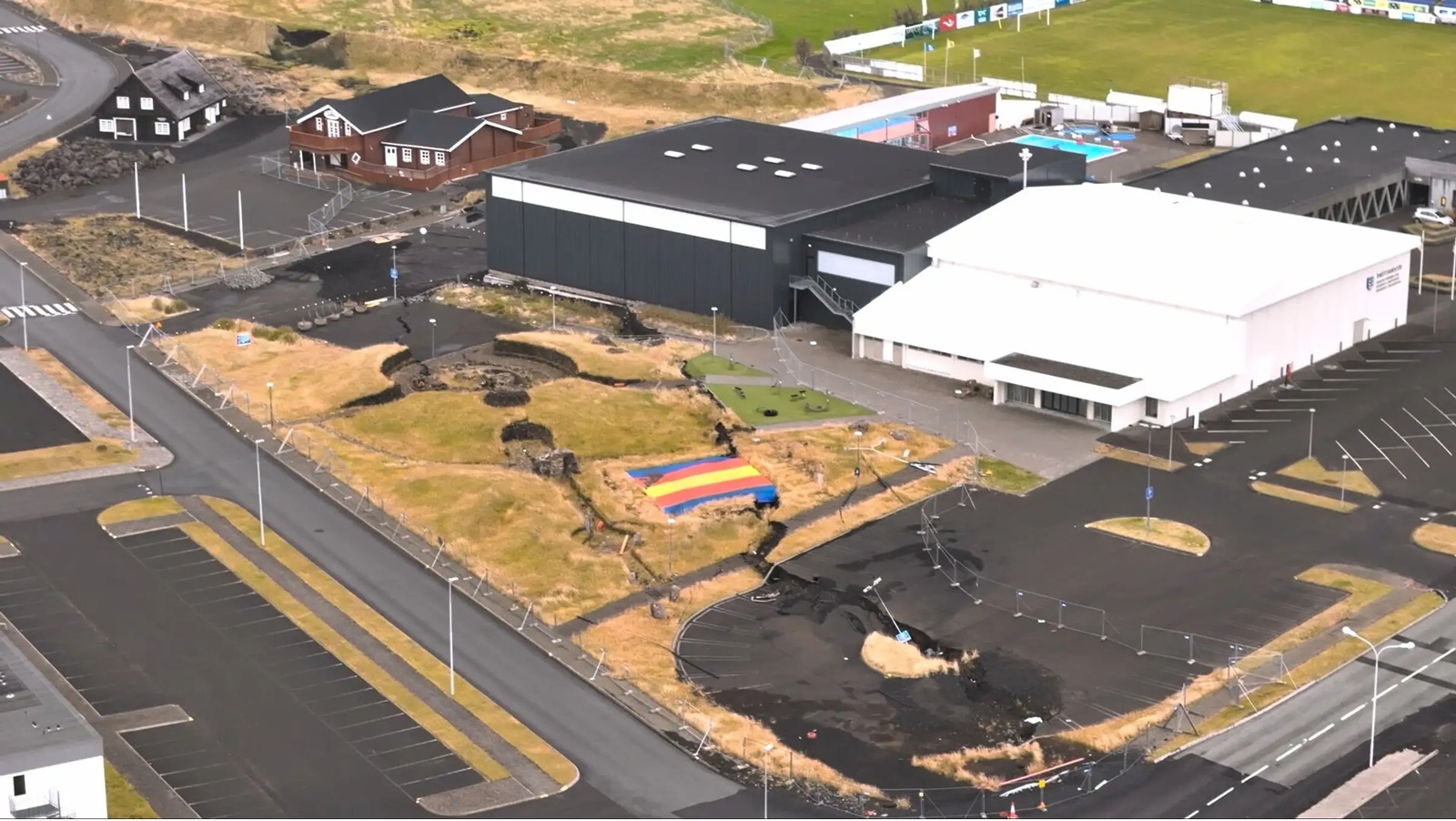
RÚV has in recent weeks reported on the legal action by the Ministry of Finance in connection with the rescue operations in Grindavík, where the largest task was the construction of protective barriers.
The estimated cost of these is around ISK 11 billion, and no one doubts how much value this unique project has saved.
Over the summer, the ministry began examining whether those who had insured their interests in the area might be expected to contribute to the cost. The energy company HS Orka and Náttúruhamfaratrygging Íslands (NTÍ, Icelandic Natural Catastrophe Insurance) received a letter at the end of June from the ministry’s lawyer stating the view that those who had benefited from the measures should pay.
HS Orka and Náttúruhamfaratrygging reacted coolly to the ministry’s idea and considered it to lack legal basis. The ministry subsequently requested that Héraðsdómur Reykjaness (Reykjanes District Court) appoint two assessors to answer a number of questions before a decision on the next steps would be taken.
A hearing took place last week, another is scheduled for the middle of next month, and informal discussions are now under way about who the two assessors should be. A degree of consensus is required on that.
HS Orka’s response to the ministry’s demand stated that the energy company was largely insured abroad, as acceptable insurance had not been available from Icelandic insurance companies, and it had not been considered an option for Náttúruhamfaratrygging to provide insurance to the company when that was sought.
Premiums would have risen sharply, as it is self-evident that insurance companies are generally reluctant to insure risks such as seismic activity and volcanic eruptions while they are ongoing.
Náttúruhamfaratrygging has until now declined to comment on the Ministry of Finance’s demand, but RÚV received last week a written response from the NTÍ board. It is signed by Sigurður Kári Kristjánsson, chair of the board of Náttúruhamfaratrygging.
In its response, the board says it examined in detail whether it would be possible to find a viable outcome for both Náttúruhamfaratrygging and Ríkissjóður (State Treasury), but it has doubts as to whether the ministry’s demand is justified and considers there to be significant uncertainty as to whether Náttúruhamfaratrygging can be regarded as liable for compensation to the state.
There are several reasons for this. The board notes, among other things, that the Insurance Contracts Act requires the insured party to do everything that can reasonably be expected of them to prevent or limit damage. However, that liability is limited to measures the insured party can themselves take. It is impossible to place the construction of lava protection barriers in hazard zones under that heading, as such projects are unthinkable without the involvement of the state.
Indeed, the board considers that a great deal would have to go wrong for a claimant to lose their right to compensation for failing to fulfil their obligations when natural disasters such as the volcanic eruptions in Grindavík occur. In addition, the rescue operations in Grindavík and Svartsengi were general in nature and intended to safeguard overall interests, not specific properties.
Náttúruhamfaratrygging also points out that the government constructed the protective barriers with reference to the Civil Defence legislation and laws on the protection of critical infrastructure on the Reykjanes peninsula. The state was fulfilling its obligations by preventing and limiting damage. The cost of constructing protective barriers or cooling lava cannot be regarded as damage in the conventional sense, and it goes without saying that the residents of Grindavík bore no responsibility for the situation.
Finally, the NTÍ board outlines the consequences it believes legal proceedings of this kind would have for the institution.
It is unlikely that the insurance companies with which Náttúruhamfaratrygging has agreements would pay compensation for lava cooling and protective barriers. Náttúruhamfaratrygging would also always have to cover its own retained risk, which currently amounts to ISK 10 billion, and could therefore only seek ISK 1.8 billion from its insurers.
It is unlikely that Náttúruhamfaratrygging’s reinsurers would agree to such a payment due to the state’s involvement in the rescue costs. All of this would ultimately end up before the courts, which would take some time and would damage the credibility and trust of counterparties that have taken many years to build and secure – not least in light of the natural disasters in Grindavík. Premiums have risen, making it difficult for Náttúruhamfaratrygging to renew or find new insurance companies.
Source: Ruv.is