


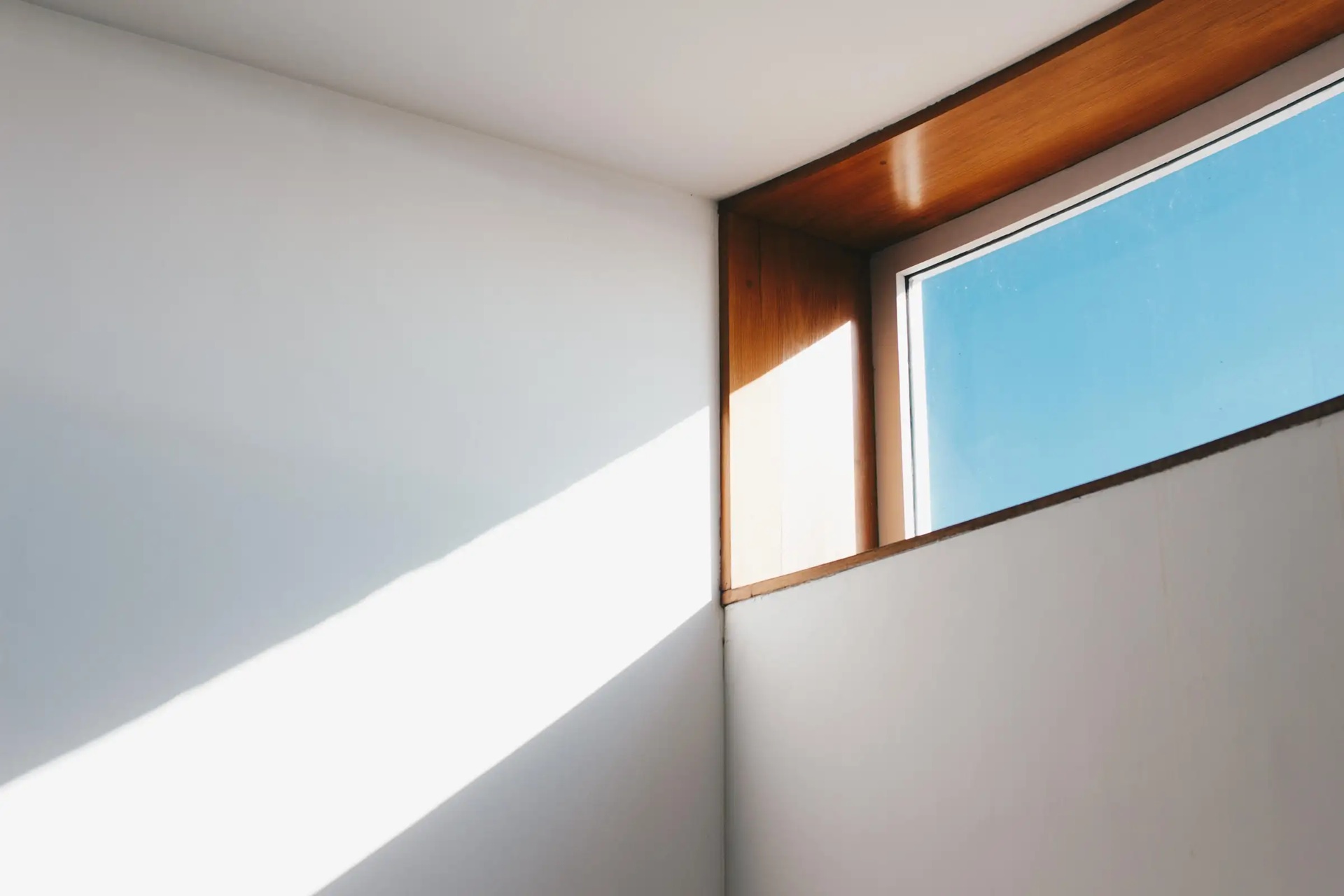
New provisions in the building regulations are intended to ensure that all homes have sufficient daylight from now on. Experts say daylight has been neglected for years in urban densification, with serious consequences for residents.
New provisions on daylight in the building regulations, which entered into force on 1 May, are intended to ensure that all homes have sufficient daylight from now on.
Experts say daylight has been neglected for years in urban densification, with serious consequences for residents.
In recent years, thousands of homes have been built in Iceland that would not meet the new requirements.
Anna María Bogadóttir, architect, and Ásta Logadóttir, electrical engineer and daylight specialist, have researched the development of apartment buildings in Iceland in the interdisciplinary research group Híbýlaauður.
They were guests on RÚV last night.
Anna María says the problem is serious.
In some cases, one could say that we have got basement flats up on the third floor.
They point out that people may even have bought flats in darkness in winter without realising that they would become almost no brighter in summer.
There are examples of residents discovering the problem when it emerges that even pot plants do not thrive on the window sills.
According to Anna María, a major change occurred around the turn of the century when the marketisation of the housing market began and requirements on light in regulations were gradually reduced.
By 2014, nothing remained in the building regulation to ensure daylight except one provision stating that in each habitable room, the light opening, that is, the window, had to be one tenth of the floor area.
That rule worked well in dispersed development, but it did not take external effects into account.
Ásta says of the period when urban densification got fully under way with taller buildings and deep balconies that shade windows, that,
We simply forgot to take daylight into account.
A lack of daylight can have serious effects on health, increase the likelihood of depression and disrupt people’s circadian rhythm.
It is nine years since Ásta first began raising the issue with the authorities.
Five years ago, the then social affairs and housing minister, Ásmundur Einar Daðason, began a review of the daylight chapter of the building regulation, but it was not until January this year that Inga Sæland approved the changes that entered into force in May.
In the meantime, thousands of buildings have been built that were in accordance with the building regulation then in force.
The new rules change this and take account of two things – external environmental effects and a measurable amount of light.
If tall buildings or deep balconies are close to a window, the window must be enlarged accordingly.
It is now also required that 40% of the floor area in a habitable room meet 300 lux for half of the daylight hours of the year. If that is not achieved, the depth of the room must be reduced.
Ólafur Árnason, managing director at Húsnæðis- og mannvirkjastofnun (Housing and Construction Authority), says the criticism by Anna and Ásta is justified to some extent.
HMS issued new guidance on daylight last Friday, intended to help developers and planning authorities meet these provisions.
He says this aspect is now being examined in a more systematic way, which means that design has to begin earlier than has been the case.
We may do that alongside the planning work. In that way we achieve this result. If this is not considered at the planning stage, it can be difficult or even impossible to manage to meet these conditions for all homes.
Ólafur says this is not a case of adding complexity to the building regulation and says there are various ways to simplify it. This is about setting clearer provisions on important issues.
The new rules apply to all local development plans approved after 1 May 2026. From 1 August 2027, they will apply to all local development plans, regardless of their age.
Ólafur says the market and developers are receiving the changes well, since people welcome having clear lines to work from.
He says it is likely that the first neighbourhoods designed entirely on the basis of the new rules will rise over the next three to four years.
Source: Ruv.is