

Consultancy Exa Nordic ehf. has signed a contract with Iceland’s Road and Coastal Administration (Vegagerðin) for the preliminary and detailed design of a new Reykjanesbraut–Bústaðavegur intersection and part of Phase 3 of CityLine (Borgarlína), from Stekkjarbakki to Vogabyggð.
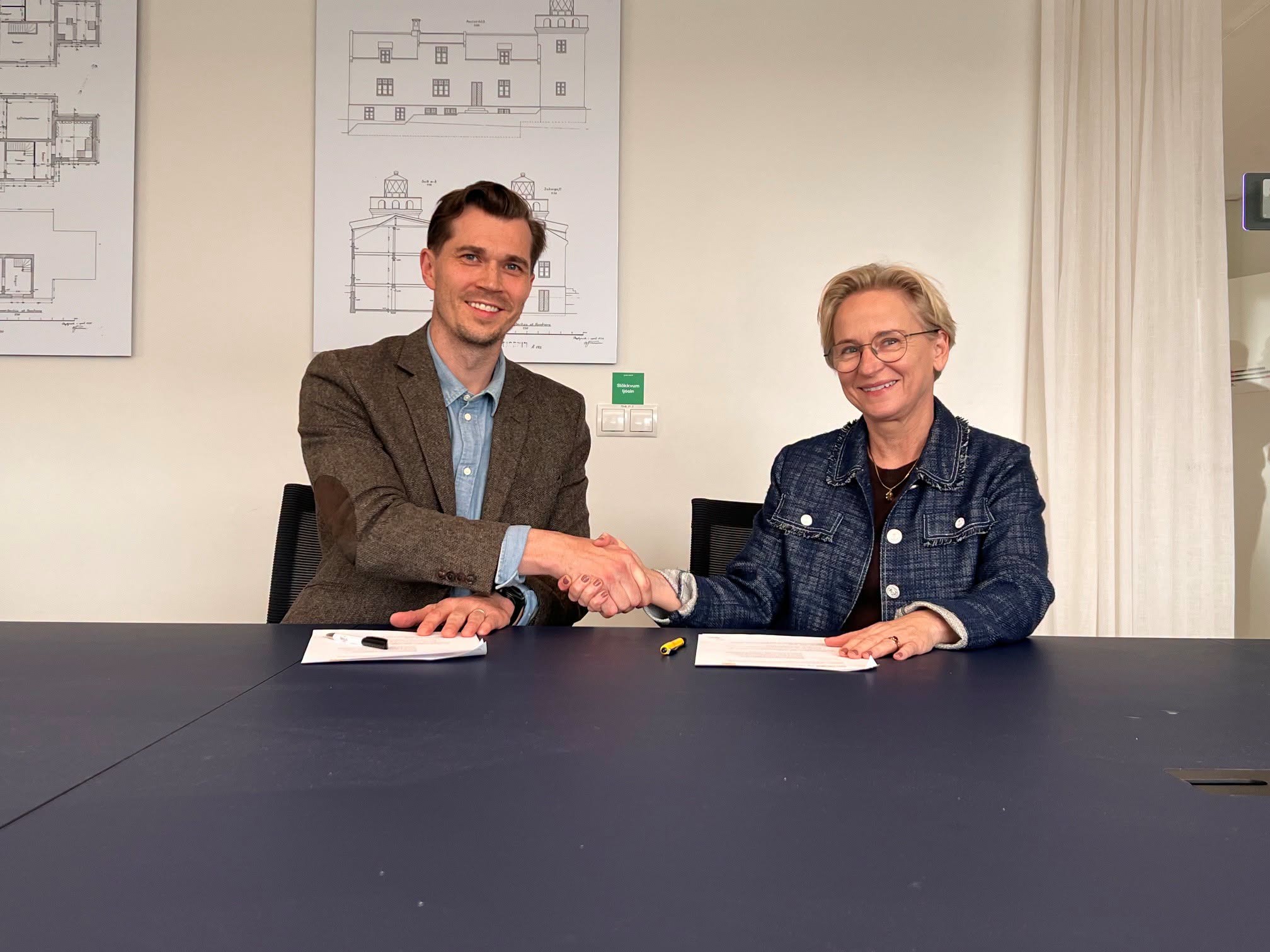
The contract was signed on 2 October by Bergþóra Þorkelsdóttir, director general of Vegagerðin, and Arnar Björn Björnsson, managing director of Exa Nordic. The company was ranked highest in a tender held by Vegagerðin and Veitur, which received five bids.
New bridge to replace signal-controlled left turn
The extensive project covers both reconstruction of the intersection and preparations for CityLine.
A new bridge will be designed at the Reykjanesbraut–Bústaðavegur intersection for traffic travelling north on Reykjanesbraut and turning onto Bústaðavegur. The bridge will replace the existing signal-controlled left turn.
The central median on Reykjanesbraut will also be closed at the intersection, and the left turn from Bústaðavegur onto northbound Reykjanesbraut will be removed. On Reykjanesbraut’s western carriageway, entry and exit ramps will be built, with right turns only into and out of Bústaðavegur.
Dedicated CityLine lanes from Stekkjarbakki
Exa Nordic’s design work also covers the CityLine alignment from Stekkjarbakki A–V to the planned Vogastöð station at Súðarvogur.
Dedicated CityLine lanes in both directions are planned along the eastern edge of Reykjanesbraut. To create space for CityLine and avoid encroaching on the protected area of Elliðaárdalur, Reykjanesbraut will be shifted west along part of the route.
Two existing underpasses beneath Reykjanesbraut will also need to be extended.
Two new bridges beneath Vesturlandsvegur
CityLine will cross Vesturlandsvegur at the western branch of the Elliðaá river, and two new bridges at the location are part of the design assignment.
The space beneath the bridges will accommodate CityLine, pedestrian and cycle paths, while the channel of the western branch of the Elliðaá will also be addressed. The south-eastern ramps of Vesturlandsvegur will need to be adapted, with a separate bridge planned for the ramp.
Utility works included
The contract covers more than roads and bridges.
It also includes the preliminary and detailed design of changes to Veitur’s utilities, including wastewater, district heating and electricity systems that must be coordinated with the new road network and CityLine.
Five engineering firms bid for the work
Vegagerðin’s tender, No. 26-110, was advertised throughout the European Economic Area. The deadline for bids was 20 August.
Five consultancy firms submitted bids: EFLA, Exa Nordic, Hnit verkfræðistofa, Verkís and VSÓ Ráðgjöf. Vegagerðin says Exa Nordic was ranked highest in the tender.
The contract value for the design work has not been published on Vegagerðin’s tender website or in the agency’s announcement about the contract signing.
Construction planned for 2029–2030
The Reykjanesbraut–Bústaðavegur intersection is part of the Capital Region Transport Agreement. The project is being developed in cooperation between Vegagerðin, Betri samgöngur, Reykjavík City and Veitur.
Vegagerðin’s project website currently lists the planned construction period as 2029–2030. Work on the preliminary proposals was completed in 2024, and Exa Nordic’s contract now takes over with the preliminary and detailed design of the project.
Originally published in Icelandic on BYGGINGAR.IS.