

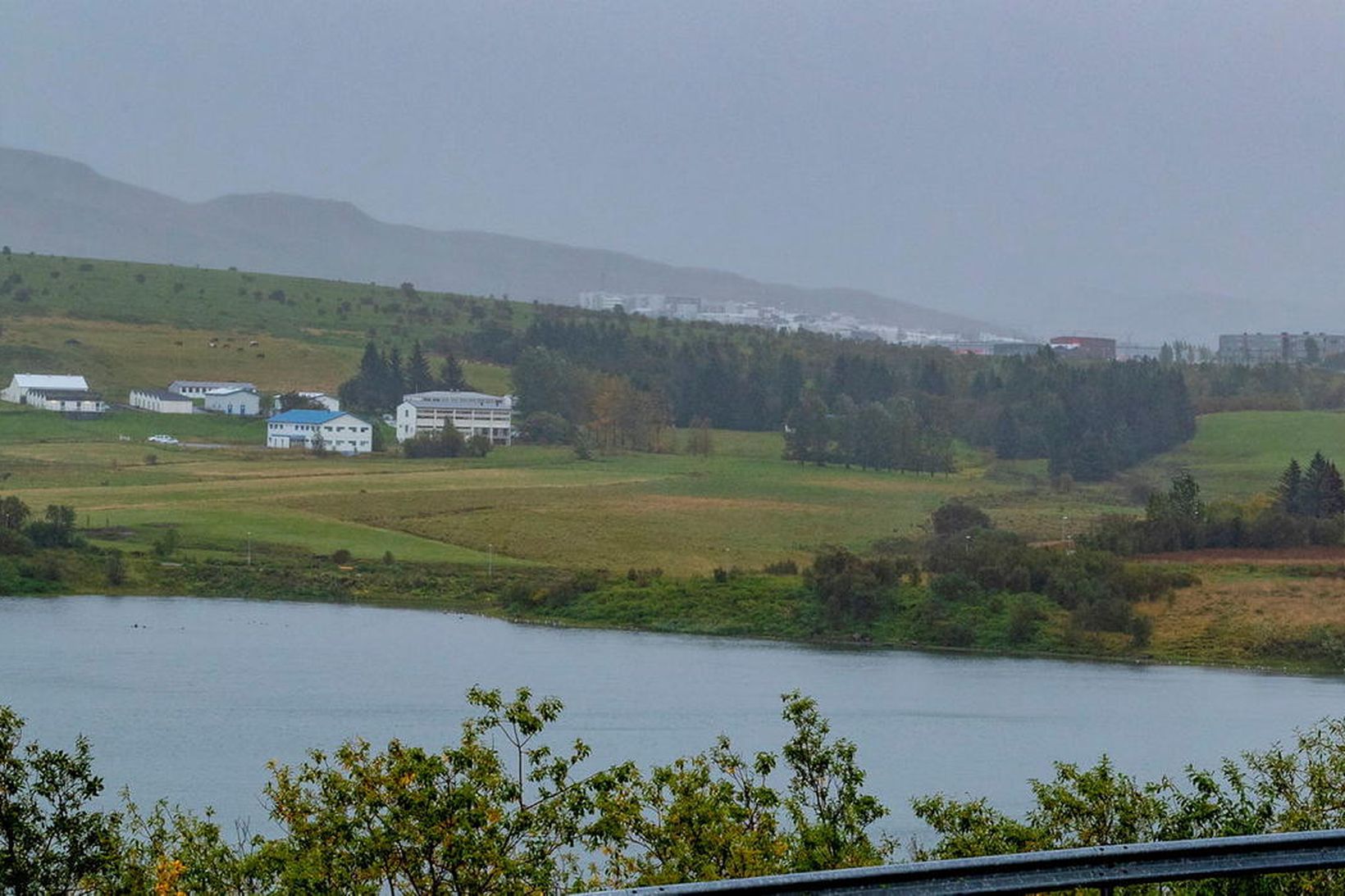
A cost estimate for bringing plots in Keldnaland to a marketable condition has not yet been prepared, and it has not been decided who will bear the cost. The cash-flow plan for the updated Transport Agreement assumes ISK 50 billion in revenue from the sale of development rights in the area to finance projects covered by the agreement.
This is stated in a response from Daði Már Kristófersson, Iceland’s minister of finance and economic affairs, to a question from Guðlaugur Þór Þórðarson, a member of parliament for the Independence Party, concerning the commitments of Betri samgöngur ohf. The response is based on information obtained from the company.
According to the response, Betri samgöngur has not committed to construction work in Keldnaland beyond planned investments in the area’s city-transit system. Those investments form part of the Transport Agreement’s construction programme.
Detailed planning has not formally begun
Betri samgöngur began preparing for Keldnaland in autumn 2021. A competition organised by the company and the City of Reykjavík for a development plan for the area concluded in autumn 2023. A working proposal for the framework section of Reykjavík’s municipal master plan for Keldnaland, together with a draft development plan and supporting documents, was presented in summer 2025.
Work is now under way on a final proposal for the framework section of the master plan, alongside preparations for the first detailed local plans. Timetabled plans for the development of basic infrastructure are also being prepared.
However, a formal planning proposal for Keldnaland as a whole has not been presented or taken into formal consideration, and the preparation of detailed local plans has not formally begun. Planning and development will be divided into smaller phases. The response states that construction of such a large and populous district will continue well into the next decade.
Plan provides for 5,800 homes
The working proposal and draft development plan provide for up to 5,800 homes in Keldnaland. This figure is based on a simple calculation that assumes an average gross floor area of 100 square metres per home. Commercial buildings are also planned, with capacity for 5,500 to 7,500 people to work there.
The total building volume, the size of the homes and their final number will not be known for several years, once detailed local plans for the entire area have been confirmed.
The response presents an illustrative calculation of revenue from the sale of development rights. It assumes that development rights for commercial buildings will generate 15% of the estimated ISK 50 billion in revenue, while residential development will generate 85%, and that there will be 5,800 homes. This is stated to equal approximately ISK 7.5 million per home, or ISK 75,000 per square metre.
For comparison, the response says that based on Garðabær and Kópavogur’s recent tenders for residential development rights on plots covered by detailed local plans, payments may have amounted to ISK 120,000–140,000 per square metre. That would correspond to ISK 12 million–14 million for a 100-square-metre home.
Infrastructure development to be negotiated
Betri samgöngur is expected to negotiate with the City of Reykjavík and utility companies on the development of shared infrastructure, including roads and utility networks, so that the plots become ready for construction.
Those agreements will seek, among other things, to ensure that infrastructure costs do not reduce the return that the sale of development rights is intended to generate for projects under the Transport Agreement.
An increase or decrease in the number of homes could also affect the return from selling development rights. This would apply if the total floor area of residential buildings increased or decreased accordingly while the value of development rights per square metre remained unchanged.
If it appears that revenue from Keldnaland will be lower than forecast in the updated Transport Agreement, Betri samgöngur could respond in cooperation with the company’s owners. Options mentioned include updating the timetable and construction plans for projects covered by the agreement or using other financing channels.
Originally published in Icelandic on BYGGINGAR.IS.