


It will cost ISK 500 to drive across the new Ölfusá bridge at Selfoss, compared with ISK 1,500 to cross the new bridge over Hornafjarðarfljót.
About 80 people are working on the Ölfusá bridge, and the project is considerably ahead of schedule. The bridge will weigh approximately 2,000 tonnes.
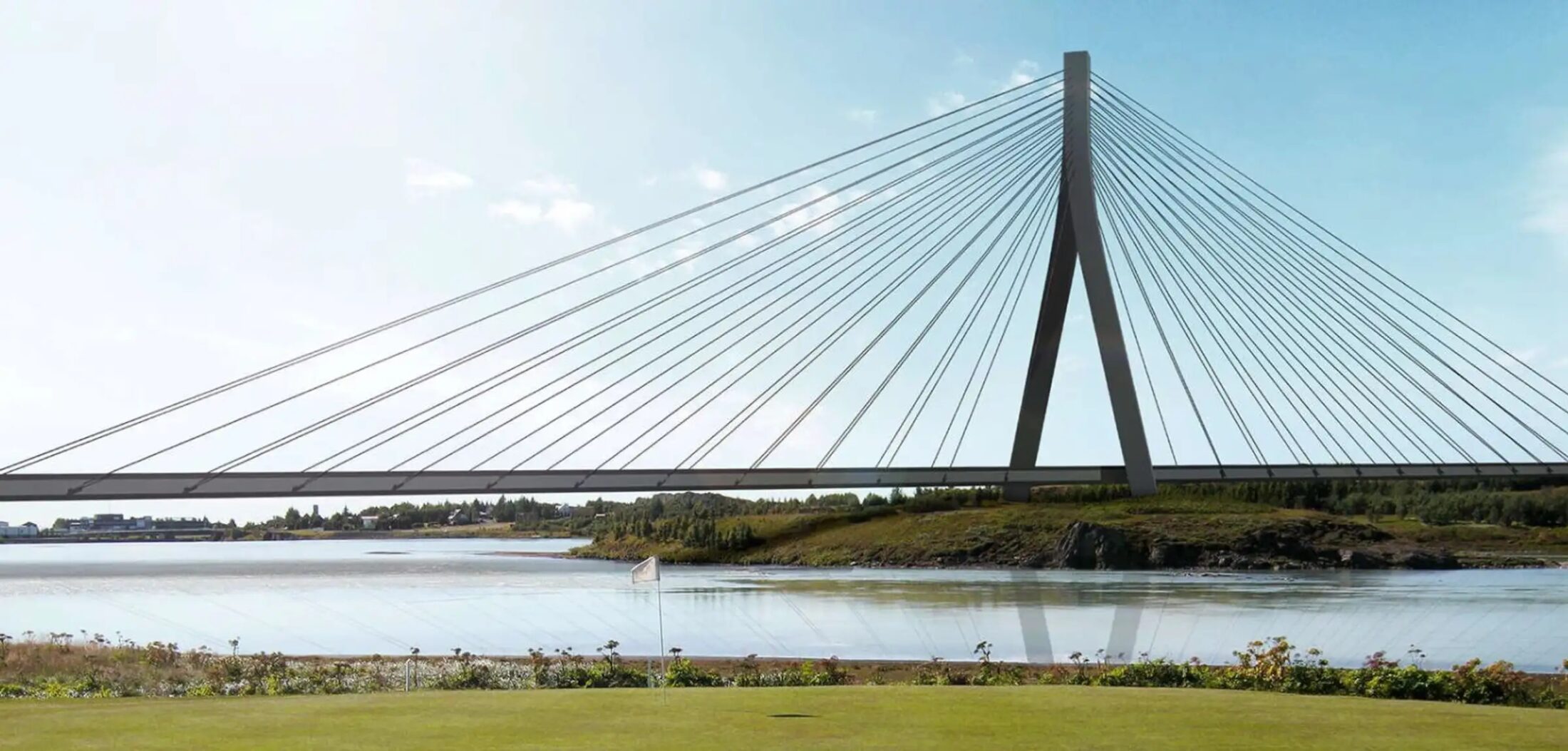
Construction is proceeding at full pace on the 330-metre cable-stayed bridge over the Ölfusá river. Several new roads around the bridge are also being built, along with underpasses.
Höskuldur Tryggvason is the project manager for Iceland’s Road and Coastal Administration, Vegagerðin, while ÞG verktakar is responsible for building the bridge.
“The project has gone well, and the construction period is now approximately halfway over. The main work at present involves assembling the bridge structure, finishing it, installing utilities and preparing it to be pulled across the river,” Höskuldur says.
Extensive welding is required to assemble the bridge structure, and that work has progressed well, according to Höskuldur.
“Yes, there is an enormous amount of welding on the structure. These are very large beams; the main beams are two metres high. They are welded together, but they arrive here in units of approximately 25 metres, with cross-beams between them. When we add up the weld lines, they amount to about 1.5 kilometres,” Höskuldur says.
“There is a great deal of welding, and the cross-sections are thick as well.”
Asked about the bridge’s weight, he says: “The entire structure weighs approximately 2,000 tonnes.”
About 80 people are currently working on the bridge, most of them foreign workers. The bridge sections are expected to be pulled across the Ölfusá around the middle of the month, provided the plans hold, Höskuldur says.
According to the construction schedule, the new bridge is due to be completed on 2 October 2028. Drivers will pay to use it.
“The expectation is that it will cost around ISK 500 for ordinary cars,” Höskuldur says.
He says he has heard no significant opposition to the charge.
“I have heard nothing other than that people are fairly satisfied with it. For many, this route will save a great deal of time. We often see long queues forming here later in the day, so it would be easier to cross here,” Höskuldur says.
Originally published in Icelandic on BYGGINGAR.IS.